


- E-Commerce Retailers
- Third-Party Logistics Providers (3PLs)
- Manufacturing Companies
- Importers and Exporters
- Food and Beverage Distributors
- Construction and Home Improvement Suppliers
- Pharmaceutical and Medical Supply Companies
- Retail Chains and Distributors
- Seasonal Businesses
- Lease Warehouse Space With RISE Commercial District
- Frequently Asked Questions
Companies across industries constantly seek ways to optimize their warehouse operations and reduce costs. One proven approach is leasing small warehouse space — an essential component of modern warehouse businesses that supports efficient supply chain management, smart inventory control, and scalable growth. Leased warehouses allow businesses to enjoy the benefits of a dedicated storage and distribution facility without the hefty investment and long-term commitment of purchasing one. Leasing warehouse space provides the flexibility, scalability and cost savings that many companies need to thrive.
This article explores the types of businesses that use leased warehouses and how they benefit from the space.
What Companies Would Benefit From Leased Small Warehouse Space?
As supply chains and business models evolve, leasing small warehouse space has become a key strategy not only for established enterprises but also for growing warehouse businesses looking to expand capacity, enhance logistics efficiency, and improve overall warehouse management. Here are some types of businesses that could use leased warehouse space to optimize their operations.
1. E-Commerce Retailers
Online retailers are among the top companies that use leased small warehouse space. These businesses require sophisticated fulfillment solutions to remain competitive in the digital marketplace. Leasing warehouses allows e-commerce companies to strategically locate inventory closer to customers for faster shipping and flexibly expand storage capacity during peak seasons.
Leased facilities also provide e-commerce retailers with temperature-controlled zones for sensitive products and cross-docking facilities for rapid throughput. By leasing a small warehouse, e-commerce businesses avoid the capital expenditure of purchasing their own small warehouses and can focus on growth without being constrained by fixed warehousing assets.
2. Third-Party Logistics Providers (3PLs)
Third-party logistics providers are another prime example of businesses that could use leased small warehouses. Leasing small warehouses in strategic locations enables 3PLs to efficiently serve their customers’ distribution needs.
As supply chain intermediaries, they require ample space to store and manage inventory for multiple clients and provide value-added services like kitting, packaging or order fulfillment. They also cross-dock shipments to optimize transportation.
3. Manufacturing Companies
Many manufacturing companies lease small warehouse space to store raw materials, work-in-progress inventory and finished goods. They also use warehouses to create quality control and testing zones, returns and reworking processing areas, and buffer inventory storage areas for just-in-time manufacturing.
Manufacturers can focus on their core competencies without the burden of managing a warehouse by leasing warehouse space. Leased facilities offer manufacturers the ability to:
- Optimize inventory management and production processes.
- Locate warehouses close to suppliers or key transportation hubs.
- Accommodate seasonal or cyclical production demands.
4. Importers and Exporters
International trade businesses require specialized facilities near transportation hubs. They frequently use leased small warehouse space to store goods during customs clearance, consolidate shipments and stage products for distribution.
Leased small warehouses near ports or border crossings can streamline logistics and reduce transportation costs for these businesses. These strategically located facilities enable companies to quickly and efficiently manage the flow of goods, ensuring timely delivery to customers and compliance with international trade regulations.
5. Food and Beverage Distributors
Food and beverage distributors, including grocery suppliers, restaurant wholesalers and specialty food importers, have some of the most specific requirements among the types of businesses that use leased warehouses. Their facilities must maintain strict environmental controls and meet food safety standards. For example, facilities must have:
- Multitemperature zones for frozen, chilled and ambient products.
- Hazard Analysis Critical Control Point-compliant storage areas.
- Quick-cooling zones for fresh produce.
- Cross-contamination prevention systems.
- Specialized loading docks with temperature seals.
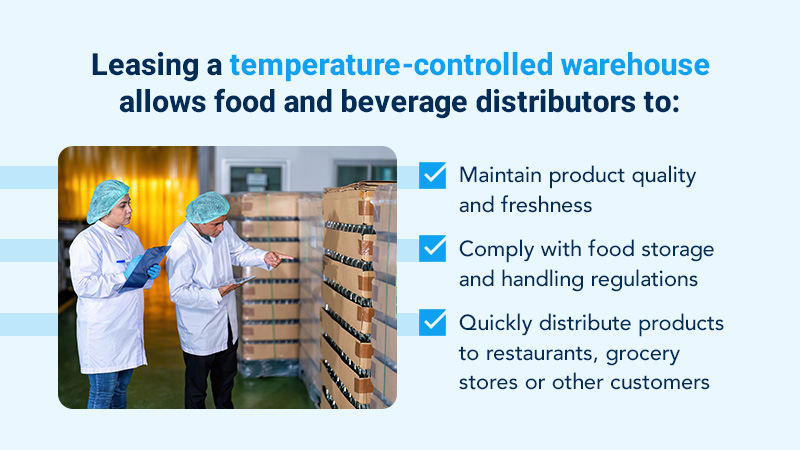
Leasing a temperature-controlled warehouse allows food and beverage distributors to maintain product quality and freshness, comply with food storage and handling regulations, and quickly distribute products to restaurants, grocery stores or other customers.
6. Construction and Home Improvement Suppliers
Construction and home improvement suppliers — including building material manufacturers, hardware stores and equipment rental companies — often lease small warehouse space to store and manage inventory. These businesses require ample storage for many products, such as lumber, tools, fixtures and appliances.
Leased warehouses allow businesses in construction and home improvement to maintain adequate inventory levels and quickly meet the demands of contractors and homeowners. Additionally, leasing small warehouse space enables suppliers to avoid the expenses and responsibilities of owning and managing a warehouse, allowing them to focus on sales and customer service.
7. Pharmaceutical and Medical Supply Companies
Pharmaceutical and medical supply companies have unique storage and distribution requirements due to the sensitive nature of their products. These facilities must maintain:
- Drug Enforcement Administration-compliant security systems for controlled substances.
- Temperature mapping and continuous monitoring.
- Validated environmental control systems.
- Comprehensive track-and-trace capabilities.
Leasing small warehouse space allows pharmaceutical and medical supply companies to focus on research, development and sales while ensuring their products are stored in compliance with regulatory requirements. It also allows companies to maintain product integrity and efficacy and efficiently distribute products to health care providers, pharmacies and patients.
8. Retail Chains and Distributors
Traditional retail operations use warehouse spaces for inventory management and distribution. These businesses require efficient systems for store replenishment, seasonal merchandise management and returns processing.
Cross-docking facilities support direct-to-store delivery programs, reducing handling costs and improving inventory turnover. Visual merchandising areas enable the preparation of store displays and promotional materials, while dedicated zones support returns processing and inventory reconditioning.
9. Seasonal Businesses
Companies with significant seasonal fluctuations in inventory requirements find particular value in leased warehouse space. Holiday decorations suppliers, sporting retailers and agricultural product distributors benefit from the ability to scale storage space according to seasonal demands. These businesses require flexible lease terms and the ability to expand or contract their storage footprint quickly.
The versatility of leased warehouse spaces allows seasonal businesses to scale operations efficiently, manage seasonal fluctuations and maintain competitive advantages in their respective markets.
Building a Warehouse Business
Beyond meeting operational needs, many entrepreneurs view leased warehouse space as an opportunity to start a warehouse business. This type of business can include activities like offering storage facilities for other companies, providing order fulfillment services, or developing niche warehouse business ideas such as micro-fulfillment centers, packaging operations, or shared workspaces for artisans and small manufacturers.
A successful warehousing business focuses on efficient inventory management, streamlined logistics, and proactive customer service. Whether you’re launching a small storage space business or scaling a regional fulfillment center, leasing a flexible facility allows you to adapt to market trends and minimize startup costs.
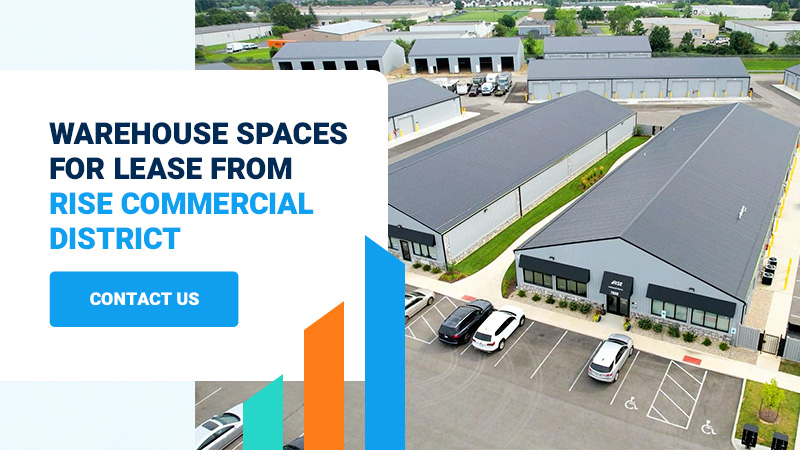
Small Warehouse Spaces for Lease From RISE Commercial District
Leasing small warehouse spaces offers numerous benefits for modern warehouse businesses of all types — from e-commerce retailers and 3PLs to small manufacturers and seasonal distributors. By leveraging flexible facilities, companies can strengthen their supply chain, improve inventory management, and operate a more profitable, scalable warehousing business. By leveraging leased facilities, these businesses can improve operational efficiency, reduce costs and focus on growth.
RISE Commercial District provides an ideal solution for companies seeking flexible, affordable and well-equipped small warehouse space. With turnkey facilities, complimentary amenities and comprehensive services, we offer a premier leasing experience.
Contact us today to discover how our leased small warehouse solutions can elevate your business.
Frequently Asked Questions
What Are the Benefits of Leasing Warehouse Space?
Leasing warehouse space offers several benefits, including flexibility, scalability and cost savings. Businesses can avoid the capital expenditure of purchasing a warehouse or larger office space for storage, adapt to changing storage needs, and locate inventory closer to customers or suppliers.
What Warehouse Lease Terms Are Available for Companies?
Warehouse leases can vary in duration, pricing and included services. For companies that use leased warehouse space, terms range from monthly agreements to multiyear contracts, with flexible options accommodating business growth and seasonal needs. Common lease types include full-service, net and modified gross leases.
How Do You Choose the Right Leased Warehouse for Your Business?
When selecting a leased warehouse, consider factors such as location, size, amenities and lease terms. Evaluate your business’s specific needs, such as proximity to transportation routes, required storage conditions and value-added services.
How Can You Optimize Your Leased Warehouse Space?
To optimize leased warehouse space, implement efficient inventory management systems, utilize vertical storage solutions and streamline product flow. Consider working with a logistics consultant or 3PL provider to maximize the efficiency of your leased warehouse.
What Type of Business Is a Warehouse?
A warehouse business provides storage, logistics, and inventory management services for goods. Some warehouses operate as fulfillment centers, storage facilities, or as part of broader supply chain operations supporting manufacturing, retail, and e-commerce industries.
Is a Warehouse Business Profitable?
Yes. A well-managed warehouse can generate consistent income through leasing, logistics services, or distribution partnerships. Success depends on location, efficient warehouse operations, and optimizing inventory management to meet customer demands.
What’s the Difference Between a Warehouse and a Business Center?
A warehouse is primarily used for storage, order fulfillment, and supply chain management, while a business center focuses on office or co-working space. Some companies, however, integrate warehouse and office space to streamline operations and reduce costs.