


Every January, business leaders set ambitious goals.
Revenue targets.
Hiring plans.
Market expansion.
New product lines.
By March, those plans become real.
Budgets are finalized. Forecasts tighten. Leadership teams commit to timelines.
The year you talked about becomes the year you actually have to operate.
Yet most companies make a critical mistake at this moment:
They plan growth without planning the physical environment that has to carry it.
Sales strategies fail in cramped warehouses.
Hiring plans stall in undersized offices.
Customer experience suffers when operations are forced to improvise inside outdated layouts.
Which is why one truth keeps showing up inside fast-growing companies:
Your growth plan needs a space plan.
Why March Is the Month That Determines Your Year
March is not about dreaming.
It’s about infrastructure.
At this point in the year:
- Financial forecasts are locked
- Hiring roadmaps are approved
- Sales pipelines are projected
- Inventory levels are modeled
- Capital allocation is decided
Leadership teams shift from speculation to execution.
That’s why March is the most dangerous time to ignore real estate strategy.
If your space can’t support what your spreadsheet promises, the spreadsheet doesn’t matter.
This is exactly why the Build Boldly Podcast is dedicating this season to budgeting, forecasting, and team alignment. Listen to the latest episode here → Build Boldly Podcast
Space is not separate from those conversations. It is the physical system underneath them.
Planning Only Works When Your Space Does
Strategic planning assumes your environment can handle:
- More people
- More inventory
- Higher throughput
- Faster fulfillment
- More customer interaction
- New equipment
- Different workflows
When your space can’t absorb those changes, everything slows. Hiring gets delayed because there are no desks. Production suffers because inventory blocks aisles. Fulfillment lags because dock access is inefficient. Customer perception drops when operations feel chaotic. Suddenly, what looked like a conservative forecast feels aggressive. Not because demand wasn’t there.
Because the infrastructure wasn’t ready.
The most resilient companies treat space as part of their operating system — not a background expense.
The Best Year Starts With the Right Move
Businesses that end the year strong almost always made proactive space decisions in Q1 or Q2.
They didn’t wait until:
- Staff were stacked in hallways
- Inventory overflowed into parking lots
- Customers noticed clutter
- Lease terms forced panic
- Equipment had nowhere to go
They moved before friction turned into crisis. That timing matters.
When space decisions are reactive, companies accept:
- Bad layouts
- Long commitments
- Oversized footprints
- Poor locations
- Expensive buildouts
When decisions are proactive, leaders can align:
- Square footage to forecast
- Layout to workflow
- Lease terms to growth cycles
- Location to logistics
- Cost structure to margin goals
That alignment is what keeps plans on track when markets shift.
Why Team Buy-In Lives in the Building
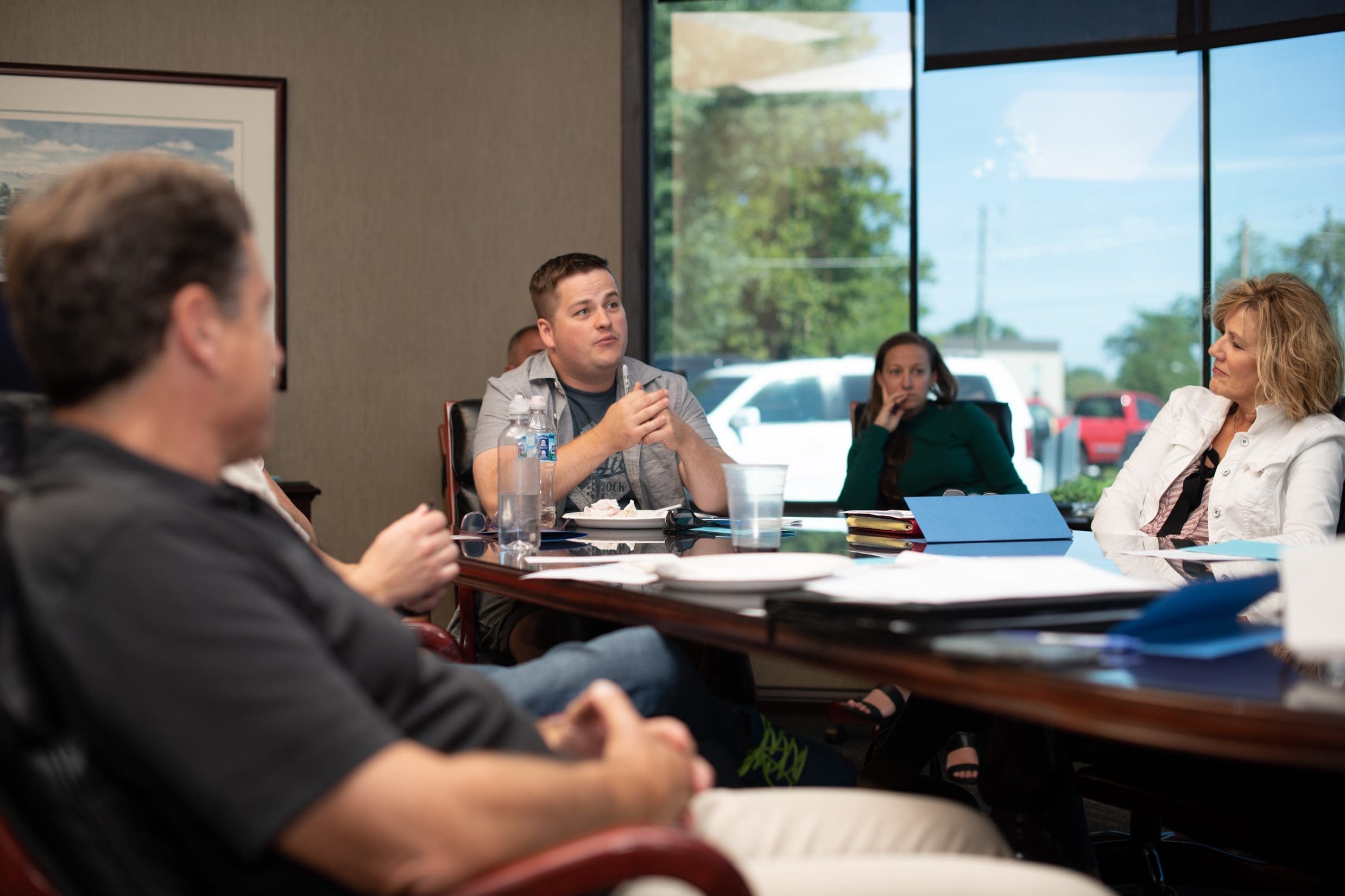
Strategy fails when teams can’t execute. And teams can’t execute inside broken systems.
Poor space design creates:
- Daily frustration
- Communication breakdowns
- Wasted time
- Safety risks
- Disorganization
- Low morale
Even the best leadership messaging falls flat when employees feel stuck navigating inefficiency.
Well-designed environments do the opposite.
They:
- Improve productivity
- Reduce friction
- Support collaboration
- Increase pride in the workplace
- Reinforce leadership’s vision
- Help people believe in the plan
Culture is not just posters and town halls. It flows from Office to Warehouse to Flex spaces at RISE Commercial District.
Culture is built in workflows, layouts, lighting, traffic flow, and how easy it is to get work done.
That’s why smart operators include facilities planning in their leadership strategy.
Space as a Forecasting Tool
Financial forecasting depends on assumptions:
How many people can we hire?
How much inventory can we hold?
How quickly can we ship?
How many clients can we serve?
What equipment can we deploy?
Every one of those assumptions is constrained, or enabled, by physical space.
If your warehouse maxes out at 80 pallets, your revenue model cannot assume 120.
If your office only seats 12 people, you cannot forecast 20 new hires without relocation costs.
If your floor plan slows order picking, your fulfillment projections are optimistic.
Real estate quietly defines the ceiling of your growth.
That’s why progressive operators bring facilities strategy into budgeting conversations early.
Not after problems appear.
How RISE Helps Companies Plan the Year They Actually Want
RISE is built around a simple idea:
Space should remove friction from growth — not create it.
Instead of forcing businesses into rigid footprints or long-term guesses, RISE focuses on:
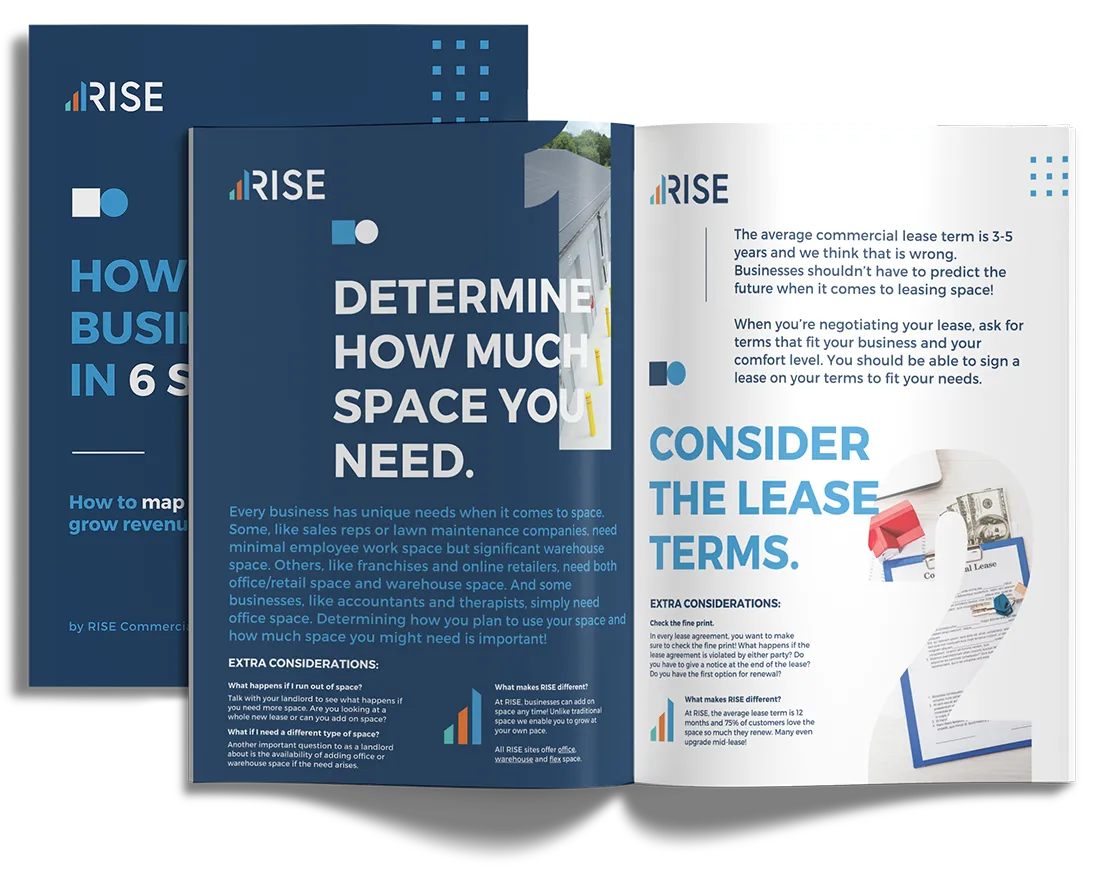
- Flexible warehouse, office, and flex environments
- Layouts that support real workflows
- Scalability without panic moves
- Professional spaces that build customer trust
- Predictable cost structures that support forecasting
This makes leasing a planning decision instead of a reaction.
Leaders can ask:
- What does our next 12 months really look like?
- What does our hiring plan require?
- What does our inventory cycle demand?
- How volatile is our market?
- How quickly could we need to expand?
- How much optionality protects us?
Then match space to strategy, not nostalgia.
Where to Learn More (and Keep Planning Smarter)
If you’re building the year ahead right now:
🎧 Dive deeper into planning, forecasting, and team alignment on the Build Boldly Podcast
📊 Follow along for strategy insights on LinkedIn
🎥 Behind-the-scenes growth stories on YouTube
📱 Catch up on Episodes and behind the scenes on Instagram
Final Thought
Most companies don’t fail because they planned poorly.
They fail because they planned in theory and operated in reality.