


- The Role of Warehouses in Business Growth
- Weighing Short-Term vs. Long-Term Warehouse Rentals
- Flexibility Considerations for Your Business
- Key Considerations for Lease Duration
- Lease Warehouse Space with RISE Commercial District
- Frequently Asked Questions
As a business owner, logistics manager or supply chain professional looking to lease a small warehouse, you know there is a difference between short-term and long-term leases. But what are the key distinctions, and how do you choose between these options?
Discover how small warehouses impact your business growth, and weigh the differences between short-term and long-term small warehouse leases. Explore the various considerations that come into play when making the best choice for your business, and learn about the key considerations for selecting duration.
The Role of Small Warehouses in Business Growth
In today’s fast-paced business world, small warehouses are more than merely a place to store stock. Effective warehousing leases can help business growth by optimizing inventory management. Ensuring you have the correct size warehouse makes you more likely to have the right amount of stock on hand so you can meet your market demands without overstocking and prevent stockouts.
Having an organized warehousing system and being centrally located allows you to increase the overall efficiency of your small warehouse. You can streamline your order fulfillment process, leading to faster turnaround times and happier customers. Being in a central location also equips you to cut down on transport costs, making it easier to promote market expansion within your region.
Additionally, as you grow or need to downscale, your warehousing can always adapt to your needs, particularly if you can secure more flexible lease agreements. Furthermore, you can always add additional technologies, such as a warehouse management system (WMS), amenities or services to your warehouse.
Weighing Short-Term vs. Long-Term Small Warehouse Rentals
When deciding on a short-term lease, which typically means a rental agreement lasting 12 months or less, or a long-term lease, businesses should consider their immediate needs and growth expectations. Both short-term and long-term leases offer distinct advantages and disadvantages that can impact operational efficiency, cost management, and flexibility. Evaluating these factors is crucial for making the right choice for your business.
Short-Term Warehouse Rental Benefits and Disadvantages
Choosing a short-term small warehouse lease is ideal for newly growing and seasonal businesses.
The following are the benefits of a short-term lease:
- Flexibility: Short-term lease agreements typically span a few months to a year, so you have greater flexibility than signing a long-term one.
- Lower initial costs: The initial deposits and fees can be lower, and because you’re leasing short-term, you can avoid long-term financial obligations.
- Reduced risk: If your business is only starting or you’re trying to break into new markets, a short-term lease is more convenient, particularly if you need to change locations quickly.
The following are the disadvantages of a short-term lease:
- Higher monthly rates: You may incur higher per-unit or per-square-foot costs than long-term leases, especially if you end up needing the space for longer.
- Limited availability: If you are looking for space on short notice or in high-demand areas, it may be more challenging to find a suitable location for the short term.
- Frequent relocation: With shorter leases, you will likely incur moving costs and disrupt your operations if you cannot renew them.
Long-Term Warehouse Rental Benefits and Disadvantages
A long-term small warehouse lease is ideal for businesses that are more established, keep large volumes of stock or have equipment that is challenging to move on short notice.
The following are the benefits of a long-term lease:
- Cost savings: Your per-square-foot cost is often cheaper in long-term leases, meaning you can invest your savings in other areas.
- Stability: If you have consistent storage needs, this type of lease offers long-term stability and predictability.
- Customization: Often, if you take out a long-term lease between five and 10 years, you can often customize the warehouse to your needs.
The following are the disadvantages of a long-term lease:
- Less flexibility: Committing to a long-term lease means you are less able to rapidly expand or downscale depending on market trends or company sizing.
- Higher initial investment: Apart from a longer financial commitment, you will likely have to pay a larger deposit and other related fees.
- Risk of obsolescence: The warehouse may become less suitable as your business grows or product demand changes.
Flexibility Considerations
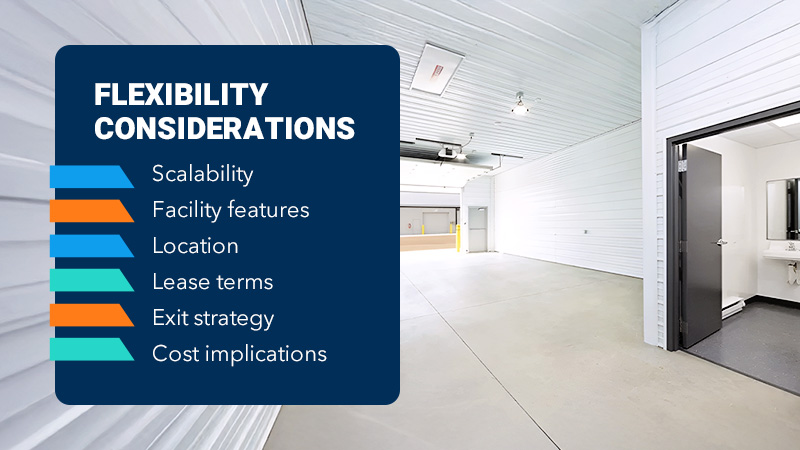
Determining the flexibility you need for your business’s long-term success is crucial when choosing between short-term and long-term warehouse leases. Adapting to changing circumstances is essential regardless of your selected option. That is why you should look for an industrial warehouse provider willing to offer more flexible and personalized lease agreements. This arrangement will help your storage solutions continuously align with your company’s needs. Some flexibility considerations for warehousing include:
- Scalability: Assess whether the warehouse can accommodate your business’s growth or contraction and if the lessor can assist.
- Facility features: You should evaluate and discuss the adaptability of the warehouse features and find out if they can be adjusted or enhanced as your needs alter.
- Location: Consider whether the warehouse location offers flexibility and effectiveness for your distribution channels and proximity to your suppliers and key markets.
- Lease terms: Look for commercial lease agreements that allow you to extend or decrease the length of your lease without incurring significant penalties.
- Exit strategy: If your warehousing requirements change, you should have a plan to move, including understanding the lease notice period and any associated costs. You may want to speak with the lessor to ask if they have other more suitable warehousing.
- Cost implications: If you can secure a more flexible lease agreement, determine if additional or higher costs are involved. Although flexibility has benefits, you’ll want to weigh the factors to decide what is best for your business.
Key Considerations for Lease Duration
When deciding how long you should lease a small warehouse, whether for as short as a single month or up to 10 years, there are several factors to consider. By examining and deciding where your business is positioned concerning each, you can make a decision that aligns with your business needs and overall goals. The following are some of the key considerations:
- Business growth and stability: Short-term leases are a good idea if your business is rapidly expanding or experiencing fluctuations. Conversely, a long-term lease is ideal if your company is stable and has predictable storage needs and a clear idea of ongoing requirements.
- Financial implications: A short-term lease is often more cost-effective if you have varying or seasonal stock and a limited budget. Long-term leases are more predictable and suited to those with higher ongoing storage needs.
- Operational flexibility: Short-term leases will work if you want greater flexibility and the ability to move locations more easily or only temporarily need additional storage. Long-term leases will give you enhanced stability. However, they make it more challenging to scale or move quickly.
- Customization needs: Determine if you require specific customizations for the warehouse. Long-term leases often allow for these modifications, while short-term ones may offer limited permissions, which could hinder your operations.
- Market conditions: Assess your industry’s current market conditions. If your market is volatile, a short-term lease is likely a safer option. A stable market is a good time to sign a long-term lease to secure predictable ongoing fees.
Contact RISE Commercial District to Lease a Small Warehouse
If you want to lease a small warehouse for short-term or long-term use and are looking for an industrial warehouse lessor who offers turnkey facilities, then RISE Commercial District is for you. We offer small warehouse leasing options and provide flexible lease agreements. Our lease periods can be as short as one to three months or as long as five to 10 years, allowing you to choose what leasing period suits your needs.
Moreover, we offer transparent, all-in-one pricing for your small warehouse facility with several inclusions such as utilities, access to forklifts, conference rooms, Wi-Fi and comprehensive security. RISE Commercial District has several warehousing locations across the Midwest, and we pride ourselves on servicing the area with excellence. To enquire about our facilities and lease periods, contact us today!
Frequently Asked Questions
What is considered a short-term warehouse lease?
Short-term leases for warehouse rentals typically range from one month to one year. The specific duration can vary depending on the leasing company and the needs of the business.
What is considered a long-term warehouse lease?
Long-term warehouse rentals refer to leasing agreements for warehouse space that typically extend for a longer duration, usually ranging from five to ten years. These rental agreements provide businesses with stability and predictability in their storage solutions, allowing them to secure space for ongoing operations and growth.
What factors should I consider when deciding between short-term and long-term warehouse rentals?
Key factors include your business’s growth plans, the stability of your inventory needs, financial considerations, operational flexibility, and market conditions. Assessing these elements will help you determine which lease duration aligns best with your operational goals.
How can I find a warehouse rental that offers flexibility in lease terms?
Look for warehouse providers like RISE Commercial District that offer customizable lease agreements, allowing you to choose terms that best fit your business needs. Consider providers that offer transparent pricing and additional amenities to enhance your warehousing experience.