


- Choosing a Location
- Lease or Buy?
- Impact to Cash Flow
- Flex Space Vs. Office Space
- Frequently Asked Questions
Key Takeaways
Growing your business? Looking into a new space is a big decision. Here’s what you need to know about the location and financial implications of a small warehouse lease:
- Location choice is about more than square footage. Think about your daily operations, accessibility needs and room to grow.
- The lease-versus-buy decision depends on your business makeup. The best way to decide is to consider your growth stage, cash position and long-term goals.
- Understanding the full financial picture helps you maintain healthy cash flow during and after the move. You’ll want to plan for upfront costs, ongoing expenses and impacts to your revenue.
- Flexible spaces can grow with your business and may offer you the best of both worlds. These options blend professional, client-ready spaces with separate areas for operations.
Let’s walk through the key questions and decisions together to cover the facts about small warehouse leasing for growing businesses.
What Should Growing Businesses Consider When Choosing a Location for Expansion?
As your business grows, you’ll know when to lease or purchase warehouse space. Working spaces packed with inventory. Shuffling through piles and boxes to find the paper, item or equipment you need. The signs are easy to read. But actually choosing a new warehouse location? That’s where many business owners get overwhelmed.
We’ve helped companies like yours make the move, and we’ve learned that success takes more than extra square footage and favorable lease terms. It takes a strong foundation for your next chapter that also helps you keep growing. Let’s break down some small warehouse location factors to consider:
- Start with your growth patterns: Your business has a natural rhythm, and understanding it can help you find the right place. When are your busy seasons? Has growth been consistent or come in spurts? Think about how much space you’ll need for the next year and a half to two years. The goal is to get enough room to support where you’re heading without predicting too far into the future.
- Consider your daily operations: Think about how you’ll use the space day-to-day. Will you need customer access? Loading docks and equipment to handle shipments? Space that combines showroom and office with warehouse and storage? Careful thought helps you avoid the temptation to focus only on size versus your actual needs.
- Balance location trade-offs: Being closer to your customer base may mean higher rent but lower delivery costs. Locations near major transportation routes might translate to easy shipping but higher competition for talent. Figure out what matters most to your business, and use that as a guide to balance the trade-offs.
- Look beyond the space itself: The right location is more than a building. It’s the ecosystem around it, too. Are you close to suppliers and partners? What about other businesses? Are there opportunities to network with and support entrepreneurs like you? What amenities exist that could help you stand out, save or operate more efficiently?
- Plan for what comes next: The space that’s perfect today could feel cramped tomorrow or next year as your success continues. Look for a location that can grow with you, whether by offering a bigger warehouse or expanding into an adjacent space. This way, you can meet today’s needs without sacrificing future opportunities.
How Do You Decide Whether to Lease or Buy Warehouse Property?
Buying versus leasing is a big decision. While owning property sounds great, we’ve found that the right choice really comes down to where you are in your business journey. Let’s look at what can help you decide.
Think About Your Financial Foundation
How much cash you have on hand really matters. Buying often means a big down payment and ongoing upkeep costs, while leasing might mean spending less upfront but higher monthly payments. When you put money into property, that’s cash you can’t use for other things your business needs, like marketing and inventory. Plus, you could miss out on other opportunities that come along if you don’t have the cash to take advantage of them. Sometimes, the flexibility of keeping money in your business makes more sense than a real estate investment.
Look at Your Business Life Stage
Where’s your business at right now? If you’ve been around for a while and have a steady income, buying might offer stability and potential equity. But if you’re still growing, leasing often works better because it’s easier to adapt and scale. Think the same amount of space can meet your needs for three months or more? A lease can give you some breathing room while you figure out longer-term space requirements.
Weigh Control Versus Flexibility
Owning your property means you can do what you want with the space, from big remodeling projects to small updates. But it also means you’re committed to that location and size for a while. Leasing might come with limits on what you can do to make the space your own, but the trade-off is more flexibility to adjust as your business grows. Think about what matters more — being able to customize everything or the freedom to adapt quickly when your needs change.
Balance Time Frame and Market Conditions
Unfortunately, the low interest rates of the last decade are long gone. Property values, lending rates and current property inventories all play into the buy-versus-lease decision. In some areas, buying could save you more long-term, while leasing may make the most financial sense in others. Look at what’s happening in your target area now and what the experts predict. Considering both can help you make a decision based on your business needs instead of trying to time the market perfectly.
How Does Leasing a Small Warehouse Space Impact Your Cash Flow and Bottom Line?
Moving into a small warehouse means big changes in your finances. Your monthly lease payment is just the start. Let’s look at the warehouse leasing impact on business cash flow so you know what to expect:
- Understand the upfront investment: Before you get the keys, plan to pay a security deposit plus the first and last month’s rent. You might also need equipment like racks or shelving to make the space work for you. Having enough cash ready helps everything go smoothly without putting too much strain on your budget.
- Prepare for ongoing costs: Monthly bills will be more than just rent. For example, your security strategy will likely include insurance coverage for protection. You’ll also want to know any costs your rent covers and which you’ll pay yourself, such as utilities, Wi-Fi and property maintenance. Knowing what to expect helps you avoid surprises.
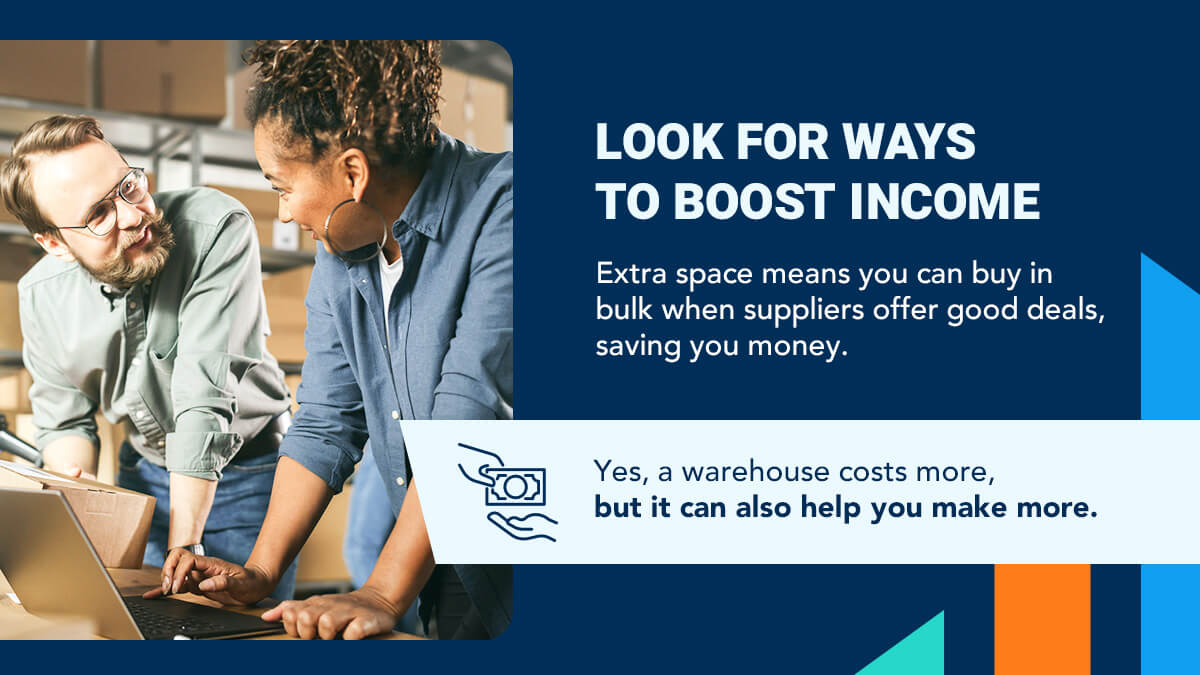
- Look for ways to boost income: Yes, a warehouse costs more, but it can also help you make more. Organized space can create more loyal customers with faster fulfillment. Plus, extra space means you can buy in bulk when suppliers offer good deals, saving you money in the long run.
- Sync cash flow and expenses: Many bills hit early in the month, while your income may be more spread out. Planning ahead helps ensure you have enough to pay the bills while you get used to your new spending patterns.
What’s the Difference Between Flex Space Versus Traditional Office Space, and Which One Is Better for Your Business?
Flex spaces and traditional office spaces meet different needs. Let’s look at what makes each one unique:
- Functionality: Flex spaces put all your operations under one roof, with separate areas for customer-facing work, operations and storage. Traditional offices, on the other hand, mostly stick to space for administrative work and meetings. Think about whether having your entire team in one place makes sense for your business.
- Cost: Flex spaces often give you more bang for your buck when you need both warehouse and office space. Traditional offices might cost more per square foot, but may also include more upscale finishes. When deciding, consider which best meets your budget and needs.
- Efficiency: Having everyone and everything in one spot can make work flow better and save time. With traditional offices, you might need to rent space elsewhere for storage or operations. Think about your day-to-day team tasks and what would make them faster and easier.
- Adaptability: Want to change your layout as you grow? Flex spaces make that easy. Traditional offices don’t give you as much freedom, especially in more professional settings. Thinking about both current and future space and setup needs can help you balance image and the potential to switch things up.
- Versatility: Want the best of all worlds? Today’s warehouses often give you more choices — flex, office and small industrial bays, plus extras like shared conference rooms. You can pick what works best now and change it as you grow.
Join the RISE Commercial District Community
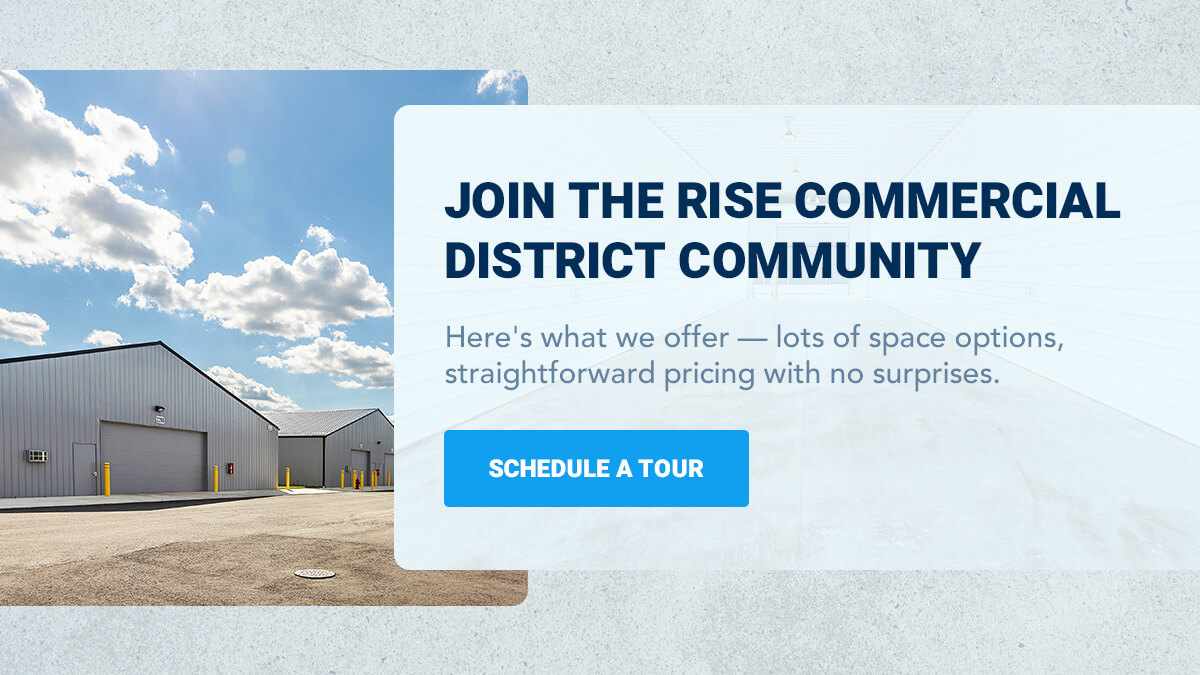
Looking for warehouse space that meets your needs today and gives you room to grow tomorrow? We’re right here in Ohio, Wisconsin, Indiana and Minnesota, with a team dedicated to helping you reach your goals. Here’s what we offer — lots of space options, straightforward pricing with no surprises, and smart features to make your life and work easier. Plus, you’ll be part of a community that’s here to help you succeed, from our team to your fellow business owners on-site.
We invite you to learn more by connecting with us online, exploring our blog, tuning into our podcast on Apple Podcasts or Spotify, or taking a tour of a nearby location to see what makes us different.
FAQs
What Mistakes Should I Avoid When Leasing Small Warehouse Space?
Here are some common situations we’ve seen companies like yours face when leasing:
- Incorrectly determining their space needs
- Not understanding the total cost picture
- Failing to consider location, security and accessibility
How Do I Choose Between a Short- or Long-Term Lease?
Both have pros and cons to think about. Considering the following can help you make the right decision for you:
- Your business’s stability and financial picture
- Operational flexibility
- Specific customization needs
- Market trends and conditions
What Features and Capabilities Should I Look for in a Small Warehouse Space?
Small warehouse bays can serve many purposes, from order fulfillment for e-commerce to customer showrooms and light manufacturing. Key features to consider include:
- Ceiling height and storage potential
- Amenities available, such as loading docks and shared conference rooms
- Available space styles and customized layout potential