


Key Takeaways
Remember when your garage was just for parking cars? Now it’s packed with inventory, and you’re struggling to find what you need. We’ve been there with hundreds of business owners just like you, helping them make the leap from makeshift spaces to their first real warehouse. Here’s what we’ve learned about making this move successful:
- Common mistakes can cost you time and money. Taking time to plan and understanding your needs is key.
- Using proven strategies and tips for negotiating business lease terms can help you get to an agreement that works for you. It’s best to focus on the terms that really support your growth, operations and bottom line.
- Understanding hidden lease costs can protect you from surprises. Careful reading can help you make sure your good deal isn’t really a budget-buster.
- Accurately evaluating the value of warehouse space means looking beyond the price tag. Factors like professional management, a thriving business ecosystem and opportunities for growth really matter.
Let’s start by breaking down the five worst mistakes when signing a commercial lease. Then, we’ll walk through negotiation strategies, help you spot any hidden costs and show you how to assess a space’s true value for your business.
What Are the 5 Biggest Mistakes Small Business Owners Make When Signing a Lease?
Every successful business has growing pains, but we’re here to help you work through them! Let’s break down how to avoid some common lease signing mistakes for small businesses.
1. Moving Too Quickly
We get it — when you’re growing a business and things are starting to overflow, you’re ready for more room now. At the same time, moving too quickly can stall that growth and dampen your bottom line. Taking a breath and planning your move carefully now leads to better decisions that can support your growth for years to come. Let’s walk through why successful moves typically take eight months to a year:
- Space planning takes vision: It can be challenging to predict where your company will be in a year, especially if you’re scaling fast. Thoughtfully mapping out your current needs and projections can help you find a space that can grow with you without stretching your budget.
- Negotiations need patience: It can take some time to find that sweet spot where everyone feels good about the terms of your lease. The bright side? The effort can pay off with longer-lasting agreements and more favorable terms.
- Moving is bigger than you think: Remember when you moved from one home to another and discovered just how much stuff you had? You may feel exactly the same way when you’re moving your business, and all those logistics take time to plan.
- Technology moves need TLC: Even with modern, plug-and-play equipment, getting everything set up and running smoothly can be challenging.
- Your team needs transition time: Your people are among your business’s most valuable assets, and they’ll need some time to adjust to new commutes and get comfortable with the exciting new changes.
2. Underestimating the Impacts of Location
You know that location matters when choosing a new warehouse, and that it’s more than just the physical address. Where you set up shop determines how quickly and cheaply you can ship and receive. It forms a first impression for visiting customers. It makes finding and keeping employees easier. In short, location touches everything that impacts your potential success and bottom line.
We’ve seen businesses just focus on the space itself, only to find out that location challenges have a way of eating into profits. A great deal on space can quickly go south if the location ends up working against you, while the right place sets you up to thrive. Let’s explore what to consider before signing that lease:
- Access to transportation: How far are you from major shipping routes and hubs? Is it easy for trucks to get in and out? Weigh any potential cost savings against the alternatives — spending more per square foot might make sense if it also means faster, cheaper logistics that keep customers happier.
- Convenience for employees and customers: Before signing a lease, check out things like how much parking is available, whether public transportation routes are nearby, and what options are in the area for employees to grab a bite to eat.
- Security and safety: Think about how your business operates. Need 24/7 access? Make sure it’s available and comes with robust security features like video monitoring, well-lit premises and access control. We’ve found that when teams feel safe in their space, they’re more productive and stick around longer.
3. Failing to Consider Future Growth and Flexibility
Your business is dynamic. Whether it’s seasonal fluctuations, growth spurts or other shifts in demand, things don’t stay the same for long. That means your lease needs to be flexible too.
We’ve learned that it’s best not to commit to a space until you know how your lease lets you adapt. Look for terms that support scalability. Can you move to a bigger unit or lease another next door if you’re growing? What if you only need it for a shorter term to accommodate seasonal peaks? What are the options if you need to scale down? Make a quick list of the flexibility your business needs and see how the lease stacks up.
4. Overlooking Daily Needs
Growing your business is exciting, and it’s easy to get caught up in the hype of finally escaping cramped quarters in your home, shed or garage. But you also don’t want to be so eager to move up that you accidentally overlook what you actually need to operate smoothly and efficiently. We’ve learned that mapping out your business musts is a great foundation, and you can start by:
- Thinking about features and amenities: Need space for customer meetings? What about employee break rooms? Getting a lot of deliveries that require loading docks and heavy equipment to move supplies? List what will actually make your work the easiest so you know where you have room for compromise.
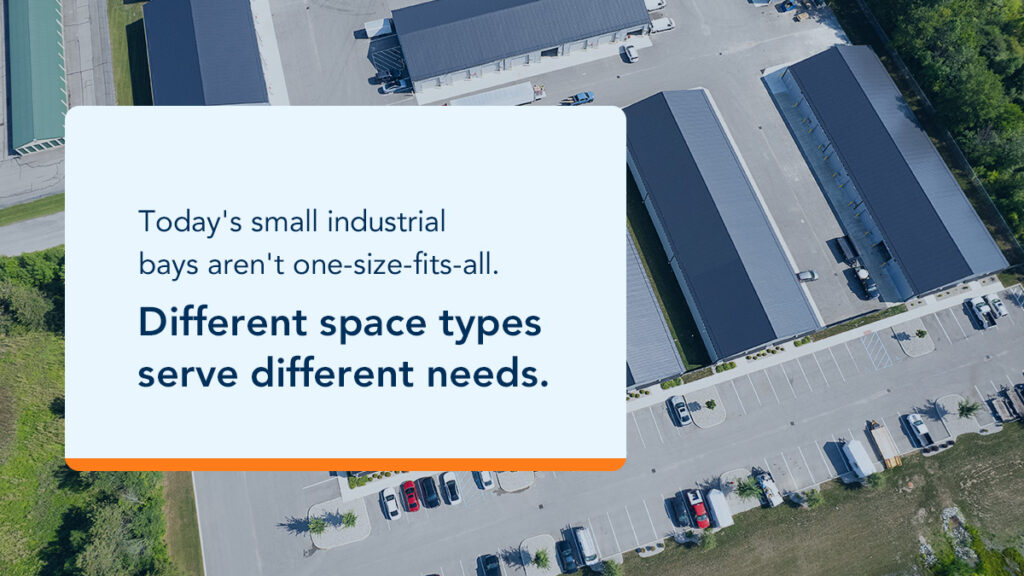
- Researching different space types available: Today’s small industrial bays aren’t one-size-fits-all. Different space types serve different needs. Want everyone and everything in one location? Do what our client Florals by Patty did and opt for a flex space that unites customer showroom and warehouse. Only need an administrative hub? Look for a bay that’s been pre-transformed into client-ready office space.
- Knowing your operational requirements: Have temperature-sensitive inventory or unique power supply needs? Narrow down your options by identifying only units with climate control or the electrical setup needed to meet those demands and keep you up and running.
5. Missing Opportunities to Make the Space Work for You
Getting the right amount of space matters — you don’t want to be paying for space that you’re not using or still feel cramped and inefficient after the move. We’ve learned that making the space work hard for you is the key to success. Let’s break down how:
- Look at different layout possibilities: Most small warehouses are blank slates, which means you have multiple ways to lay them out. A U-shaped configuration may make sense for e-commerce businesses, while an I-shaped one might be best for light manufacturing. Map out how people, inventory and equipment can logically share the space to reduce bottlenecks and support high efficiency.
- Think about your workflow and its changes: Where do materials come in and finished products go out? Where will you store seldom-needed goods versus what your team uses daily? Would portable workstations help you adapt on the fly? A little planning ahead of time can mean making the most out of every square foot, every day.
- Check out ceiling height: One of the biggest benefits of high ceilings is their potential for vertical storage. Adding customized racks and shelving helps maximize the space and can make workflows smoother and easier.
How Can You Negotiate Lease Terms in a Way That Benefits Your Business?
Negotiating a lease for your business doesn’t have to feel like a high-stakes poker game with a card shark. The key is knowing what’s typically flexible and what’s not to reach a workable agreement. Here’s what we’ve learned so far about how to negotiate business lease terms effectively:
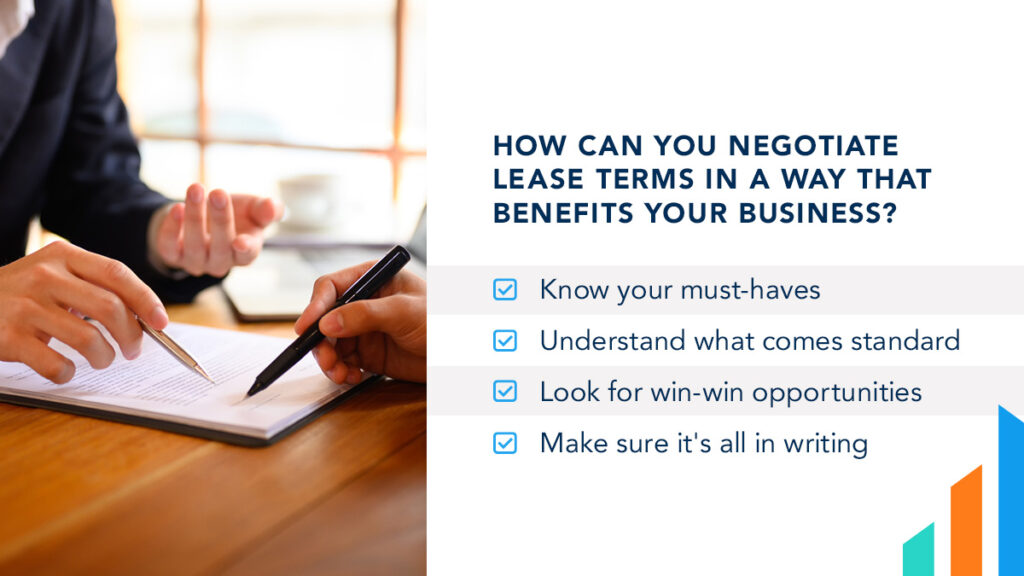
- Know your must-haves: What can you absolutely not be without to be successful? That’s the best starting point — having a list of priorities helps you stay focused on what really matters to your business.
- Understand what comes standard: Some terms are set in stone in commercial leases, while others have some wiggle room. Knowing the difference between the two helps you pinpoint where negotiating makes the most sense.
- Look for win-win opportunities: The best negotiations work for both parties. The easiest places to make progress are on terms where you can both get a win, such as discounted leasing costs for a longer-term signing.
- Make sure it’s all in writing: We recommend not relying on a verbal agreement. It’s best to get everything spelled out in writing in your lease to protect you both and head off disputes.
What Are the Hidden Costs in Business Space Leases That Many Businesses Overlook?
Let’s talk about costs — both the obvious ones and those that might surprise you along the way. While most warehouse owners (including us!) are upfront about pricing, we know leases can be complex documents to navigate. The result? Underestimating total costs and the myth that every property owner sneaks hidden costs into their business lease agreements. It’s a common practice for some expenses to be passed on, so let’s clear up the confusion about what you could come across.
Common Area Maintenance Charges
CAM charges include expenses for taking care of shared areas on the property. They often cover things like landscaping and snow removal, cleaning services and security systems. The issue with CAM charges is that they can be unpredictable. For instance, one winter might bring heavy, frequent snowfall, while the next is relatively mild. The more often the plow arrives, the more often you’ll see a bill for it.
You might also pay CAM charges for shared utilities if you don’t have a separate meter and your lease doesn’t cover your utilities. The problem here is that if the business next door uses twice the power you do, you could still be paying the same amount if you have the same square footage.
Fortunately, CAM charges are typically negotiable. Asking for more favorable terms, like a fixed-rate fee or cap on charges, can help keep them more predictable for you.
Modification and Improvement Policies
Need to customize your space to meet your needs? Look closely at any terms about modifications and improvements. Some leases are more limited about what you can do, while others have more leeway. Before you decide to remodel, make sure you know what’s allowed. It’s also smart to see if your lease has “make-good” clauses — terms that say you have to return the warehouse to the condition it was in when you leased it. That could include having to repaint and remove modifications on your own dime.
Other Costs You Might See in the Terms
Every warehouse is different, which means every lease is too. Let’s explore some other costs you might come across in lease agreements:
- Rent increases: Agreements typically provide for rent increases every so often. For example, a lease may call for a yearly percentage increase tied to a common economic indicator, such as the Consumer Price Index. Make sure you look carefully at how bumps are calculated and when they occur so you can negotiate them for your best interests.
- Percent-of-sales clauses: Some property owners tack a percent-of-sales charge onto the base rent, especially if the square-footage price is low for the area. To avoid any surprises, we suggest combing the lease for this language before you sign.
- Real estate tax: Some leases will include terms that pass on property tax proportionately to each company leasing the property. That means tax hikes will likely come with a hike in your share of the expense.
- Insurance: Property owners sometimes charge your business a portion of their insurance premiums. Remember that coverage is typically only for the physical property and not your assets. It’s best to get your own insurance to protect your investments during leasing.
How Do You Assess a Warehouse Space’s True Value?
The true value of a warehouse space is more than the monthly rent — it’s about what you get in return for what you spend. Let’s break down some of the other factors determining warehouse space value:
- Professional management: Professional on-site management matters. With the right warehouse space, you get responsive maintenance and problem-solving, guidance when you need it, and a management team invested in your success.
- Community benefits: Look for warehouses connected to a larger community of like-minded business owners ready to offer you support. You’ll get practical advice and networking opportunities to boot!
- Value-added services: Read your lease to make sure you know everything that’s included in your monthly cost. Reputable, stable warehouses with a history of long-term customer satisfaction often have the best features and amenities to help you thrive.
Start Your Next Chapter With RISE Commercial District

Looking for space that works as hard as you do? Let us help you find it at a nearby RISE Commercial District location in Indiana, Ohio, Wisconsin or Minnesota.
When you partner with us, you join a growing community of business owners like you who want to see you succeed as much as our team does. We’ll help you avoid the common mistakes of leasing with transparent pricing, flexibility and scalability, and features and amenities to make your work easier.
Reach out to connect with us online, stop by for a personal tour or tune in to Build Boldly on Apple Podcasts or Spotify to get to know us better.
Frequently Asked Questions
What Can I Do With Leased Small Warehouse Space?
Small industrial bays are ideal for many uses, and they definitely beat working out of your garage! Think e-commerce businesses, customer showrooms, contractor operations and almost anything in between.
Should I Consider a Short- or Long-Term Lease for My Business?
Both have pros and cons to explore that can make one a better fit than the other. See our guide for practical advice to help you decide what will work best for your business.
How Do I Know When It’s Time to Lease a Small Warehouse?
You’ll know when the growing pains hit your business! Some common signals include not being able to keep up with demand, overflowing storage in your current space, and quarters that are too cramped for your team to work efficiently.